“Take care of your body. It’s the only place you have to live.” – Jim Rohn

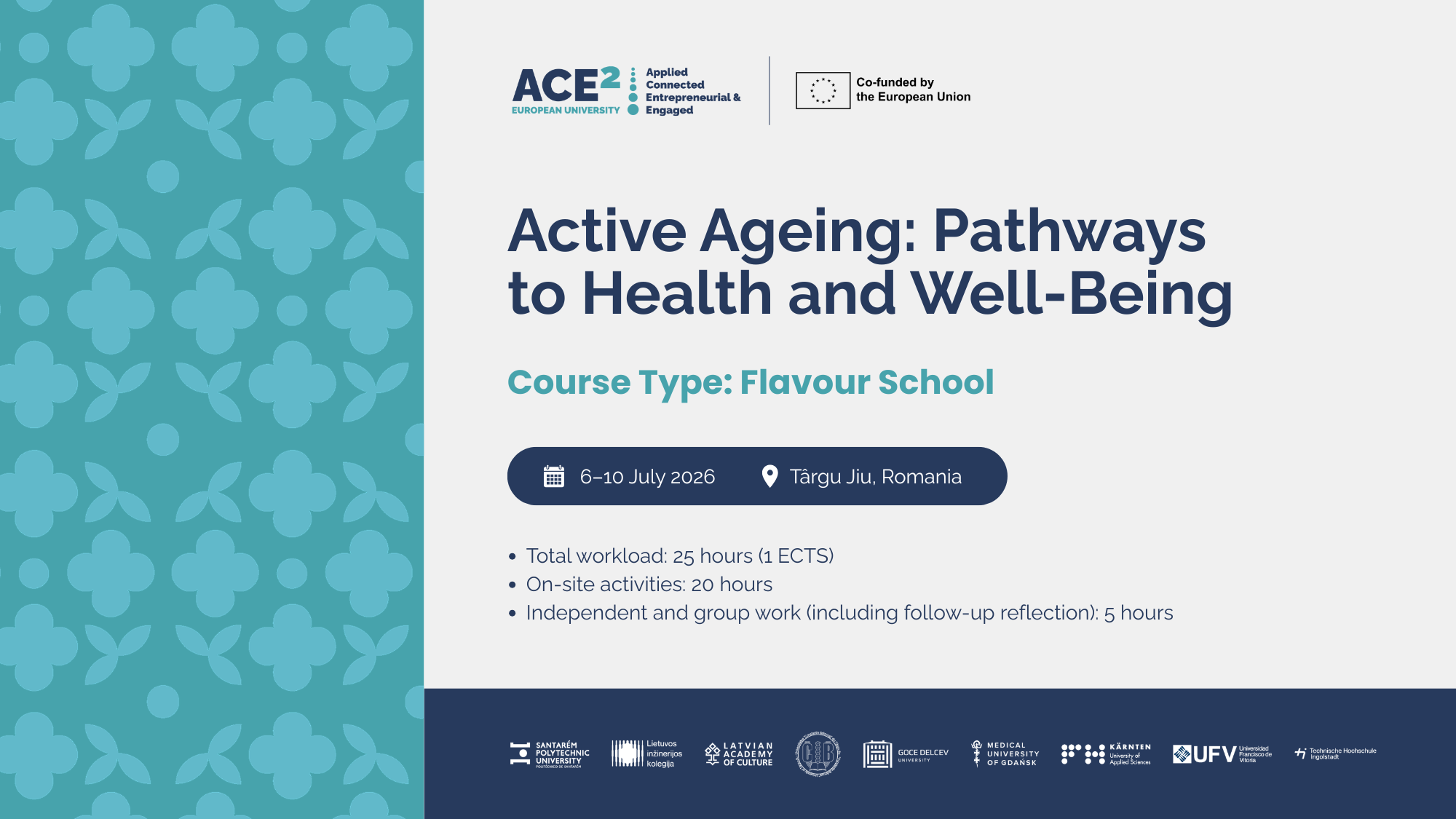
This interdisciplinary Flavour School aims to equip students with the knowledge, skills, and attitudes necessary to promote health, well-being, and quality of life in an ageing society. Grounded in real challenges from the local community, the course connects theory with practice, enabling students to interact directly with professionals in healthcare, social work, nutrition, education, and civil society who are engaged in promoting active and healthy ageing.Families, communities, and organisations need to support older adults by providing programmes, resources, and an environment that encourages physical, social, mental, and emotional well-being.

Participants will explore the concept of active ageing through multiple disciplinary perspectives – medical, psychological, social, cultural, environmental, and ethical. The course emphasizes the importance of inclusivity, intergenerational solidarity, and community-based approaches to supporting older adults. Learning activities will include interactive seminars, case studies, field visits to community organisations and care centres, participatory workshops, and collaborative project development.

The course is designed for students preparing for careers in public health, social work, psychology, education, urban and community development, cultural studies, and related fields. It encourages a holistic understanding of ageing as a dynamic process shaped by lifestyle, environment, and social engagement.

At the end of the programme, students will develop a team-based research or intervention project at their home universities, focusing on a topic related to active and healthy ageing—such as social inclusion, lifelong learning, age-friendly environments, or nutrition and physical activity for older adults. The results will be shared in a collective publication and may serve as a foundation for future international or European-funded collaborations. Students will also be invited to present their outcomes at academic and community forums within the Alliance network and beyond.

Organizer: Universidad Francisco de Vitoria - UFV
Country: Romania
Course Overview: An interdisciplinary short course that equips students to promote health, well-being, and quality of life in an ageing society. Rooted in real challenges from the local community, it bridges theory and practice—students work directly with professionals across healthcare, social work, nutrition, education, and civil society. Participants explore active ageing through multiple lenses (medical, psychological, social, cultural, environmental, and ethical), with a strong focus on inclusivity, intergenerational solidarity, and community-based approaches. Learning happens through interactive seminars, case studies, field visits to care centres and community organisations, participatory workshops, and collaborative projects. Designed for students heading into public health, social work, psychology, education, community development, and related fields, the course treats ageing as a dynamic process shaped by lifestyle, environment, and social engagement. Teams finish by developing a research or intervention project at their home universities—on themes like social inclusion, lifelong learning, age-friendly environments, or nutrition and physical activity—with results shared in a collective publication and at Alliance forums.
Learning Outcomes: By the end of the course, students will be able to explain the factors shaping healthy ageing from an interdisciplinary perspective; assess older adults' needs within their social and environmental context; communicate empathetically and work in multicultural teams; design community-based solutions promoting active ageing; and critically reflect on ethical issues of dignity, autonomy, and inclusion in an ageing society.
Skills Developed: Students will be able to analyse the determinants of health and well-being in older adulthood and identify interdisciplinary approaches to active ageing. They will communicate effectively and empathetically with older adults, collaborate in diverse multicultural teams, and design context-sensitive solutions to real community challenges. They will also strengthen critical thinking on dignity, autonomy, and inclusion, gaining practical and reflective competences for age-friendly communities.
ECTS: 2

Accessibility

Background Colour Background Colour

Font Face Font Face

Font Kerning Font Kerning

Font Size Font Size

1

Image Visibility Image Visibility

Letter Spacing Letter Spacing

0

Line Height Line Height

1.2

Link Highlight Link Highlight

Paragraph Width Paragraph Width

0

Text Alignment Text Alignment

Text Colour Text Colour